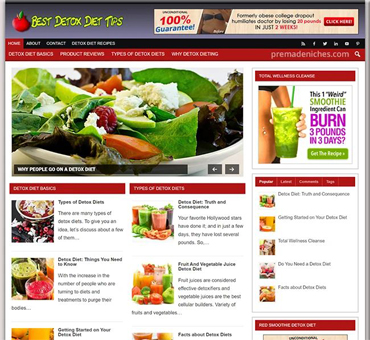


Affiliate websites are content-driven businesses that recommend products or services and earn a commission when visitors complete qualifying actions through tracked links. Their value comes from helping people make better decisions, not from placing links everywhere. A successful site combines a clear audience, useful information, trustworthy recommendations, technically sound publishing, and a realistic plan for attracting visitors.
Building one profitably requires patience and disciplined testing. There is no guaranteed income, and results vary with topic, competition, audience intent, product quality, traffic sources, and the rules of each affiliate program. Nevertheless, the model can be practical when treated as a long-term publishing business rather than a shortcut to passive income.
Affiliate Websites: What an Affiliate Website Does
An affiliate site sits between a potential customer and a merchant. The publisher creates articles, comparisons, tutorials, reviews, videos, email messages, or other helpful resources. Links containing an affiliate identifier send interested readers to a merchant. If the reader purchases, registers, or completes another approved action, the publisher may receive compensation.
The merchant handles inventory, payment processing, delivery, customer service, and usually refunds. The affiliate focuses on audience development, content, recommendations, and measurement. This division can make the model attractive because you do not need to manufacture products or manage fulfillment. However, you also have limited control over commission rates, tracking, product availability, and program policies.
The strongest websites answer a specific question for a specific group. A broad site about “everything useful” usually lacks a clear identity. A focused site helping renters choose compact kitchen equipment, for example, can develop stronger expertise and more relevant recommendations than a general shopping blog.

Choose a Profitable, Defensible Niche
Niche selection determines what you can publish, whom you can serve, and whether enough commercial opportunities exist. Begin with problems rather than product categories. Ask what people struggle to choose, install, compare, maintain, or improve. Topics involving repeated purchases, expensive decisions, specialized equipment, subscriptions, or professional tools may offer several monetization paths.
Demand alone is insufficient. A popular topic may be dominated by established publications, manufacturers, retailers, and communities. Competition is not automatically a reason to quit, but it requires a sharper angle. You might serve a particular experience level, budget, location, use case, accessibility need, or workflow.
Assess a possible niche using five questions:
Audience clarity
Can you describe the intended reader in one sentence? “People interested in technology” is too vague. “Freelancers choosing secure accounting software for a small remote practice” is more actionable. A defined audience makes language, examples, product criteria, and content planning easier.

Commercial relevance
Do readers have a reason to spend money, and are suitable affiliate programs available? Informational interest may create traffic without creating revenue. Examine whether merchants serve the audience and whether their terms permit your intended promotional methods.
Content depth
Can you produce many genuinely different resources? A durable niche supports beginner explanations, buying guides, comparisons, troubleshooting articles, maintenance advice, alternatives, and decision checklists. If every article would repeat the same recommendation, the niche may be too narrow.
Credibility requirements
Some subjects carry serious health, legal, financial, or safety consequences. They demand careful sourcing, appropriate qualifications, conservative language, and professional guidance where relevant. Choose a topic whose responsibility matches your knowledge and resources.
Sustainable interest
Can you remain interested long enough to publish consistently? You do not need personal enthusiasm for every subtopic, but sustained curiosity helps you investigate products honestly and notice changing reader needs.
Research Programs and Products Carefully
After choosing a niche, create a merchant and product map. List the main problems readers face, the products that address them, and the programs that may compensate referrals. Consider manufacturer programs, retailer networks, software partnerships, educational platforms, and services. Read each agreement before joining. Pay attention to prohibited advertising channels, trademark rules, cookie or attribution terms, payment thresholds, geographic restrictions, disclosure requirements, and commission changes.
Do not select products solely because they pay well. A high commission cannot rescue a poor fit, misleading sales page, unreliable service, or weak customer support. Recommend items that solve the reader’s stated problem and explain who should not buy them. This increases trust and reduces the chance that short-term earnings damage long-term credibility.
Build a simple evaluation framework. Criteria might include performance, compatibility, learning curve, durability, support, privacy, total cost, and return conditions. Weight criteria according to the audience. A beginner may prioritize setup and guidance, while a specialist may care more about integrations or control. Keep evidence separate from opinion: identify what the manufacturer claims, what documentation confirms, and what remains uncertain.
Plan Content Around Intent
A profitable content system includes several stages of reader intent. Educational articles attract people defining a problem. Consideration articles help them compare approaches. Commercial articles support a purchase decision. Post-purchase resources help them use, maintain, or replace what they bought. This structure is more useful than publishing only reviews.
Create a content map with a central topic and related supporting pages. A central guide might explain how to choose a product category. Supporting pages could compare leading options, explain essential features, solve common setup issues, and clarify alternatives. Link these pages naturally so readers can move from understanding to action without being forced toward a merchant.
Commercial content should be specific. Instead of saying one item is “the best,” explain the conditions under which it is a suitable choice. A comparison should use consistent criteria and acknowledge meaningful differences. A review should cover setup, practical use, limitations, maintenance, compatibility, and value, not merely repeat marketing language.
A useful article structure
Open with the reader’s problem and provide a concise answer or direction. State the criteria used. Present options with clear distinctions. Explain tradeoffs, costs that may be overlooked, and relevant limitations. Include a recommendation framework rather than assuming every reader has the same priorities. End with a practical next step.
Update important pages when products, prices, features, availability, or policies change. Remove broken links and replace discontinued recommendations. Date updates honestly; do not imply a fresh evaluation if only a minor edit occurred.
Create Trustworthy Reviews and Recommendations
Readers can recognize shallow affiliate content quickly. Trust grows when you show how a recommendation was reached. Describe your review method accurately. If you used a product, explain the conditions and limits of that experience. If you did not, do not imply testing. Use manufacturer documentation, user manuals, independent evidence, and clearly attributed information where appropriate, while avoiding invented citations or unsupported performance claims.
Disclose affiliate relationships in plain language near relevant links and in a broader disclosure page. The disclosure should be noticeable, understandable, and consistent with applicable rules in your jurisdiction and the platform’s requirements. Do not hide a commercial relationship in obscure legal text.
Use balanced language. Mention disadvantages, compatibility constraints, recurring charges, cancellation conditions, privacy considerations, and situations where an alternative is better. A reader may still choose the recommended product because the explanation feels credible. Persuasion works best when it respects agency.
Build the Website for Usability
A website does not need extravagant design, but it must be easy to navigate. Choose a readable layout, clear menus, descriptive headings, accessible contrast, and mobile-friendly pages. Keep advertisements and promotional elements from overwhelming the main answer. Fast, stable pages improve the experience, although technical optimization should support useful content rather than replace it.
Organize the site into logical categories. Make contact information, editorial policies, privacy information, affiliate disclosures, and terms easy to find. Use descriptive link text so readers understand where a link leads. Add meaningful alternative text to informative images and avoid using images merely as decoration.

Install analytics that help answer practical questions: Which pages attract visitors? Which links receive engagement? Where do readers leave? Which content contributes to conversions? Tracking is imperfect, especially when devices, browsers, consent choices, or merchant systems interrupt attribution. Treat reports as directional evidence, not absolute truth.
Protect the site with dependable hosting, updates, backups, strong administrator credentials, and appropriate security measures. If you collect email addresses or other personal information, understand your obligations and provide a transparent privacy explanation.
Attract the Right Visitors
Search visibility can provide durable traffic, but it should not be the only plan. Build content that deserves attention because it is clearer, more complete, or more useful for a defined question. Use language readers naturally understand, descriptive page titles, logical headings, internal links, and accurate summaries. Avoid publishing large volumes of nearly identical pages.
Other channels may fit certain niches better. A newsletter can bring readers back for updates and explain recommendations in a personal format. Short educational videos can demonstrate setup or feature differences. Communities can reveal recurring questions, although promotional behavior may violate their rules. Partnerships, podcasts, expert interviews, and carefully managed social accounts can introduce the site to relevant audiences.
Do not purchase questionable traffic or use deceptive tactics. Sudden visitors without genuine interest rarely create durable revenue and may create compliance or reputation problems. Focus on attracting people whose needs match the products you explain.
Measure Revenue and Improve Decisions
Revenue is not the only useful metric. Monitor page visits, engaged reading, email subscriptions, outbound link clicks, conversion signals available from merchants, earnings per click where meaningful, and refund patterns if reported. Compare pages serving similar intent rather than judging an educational article by the same standard as a buying guide.
When a page receives attention but few clicks, inspect relevance, placement, clarity, and reader intent. Perhaps the article answers the question completely and does not need a commercial recommendation. If clicks occur but sales do not, investigate product fit, merchant quality, pricing, tracking, and the expectations created by the page. Do not automatically add more buttons.
Run controlled improvements. Change one important element at a time when possible, record the change, and allow enough time for meaningful observation. Test clearer comparison tables, better explanations, updated recommendations, or more relevant calls to action. Avoid claiming certainty from small or noisy results.
Diversify carefully
Relying on one merchant, platform, traffic source, or product category creates vulnerability. Diversification can reduce risk, but unrelated offers can confuse readers. Add alternatives only when they serve the same audience and solve a legitimate adjacent problem. Maintain editorial standards across every partnership.

Common Mistakes to Avoid
The first mistake is choosing a niche for commission rates alone. The second is publishing generic content that repeats product descriptions. The third is recommending items without understanding them. Other failures include ignoring disclosure obligations, copying competitors, hiding limitations, allowing links to become outdated, and expecting immediate passive income.
Another problem is confusing traffic with business health. Thousands of visitors who have no purchase intent may produce less value than a smaller audience with a well-defined need. Likewise, a high click rate can be misleading if the merchant converts poorly or refunds many orders.
Avoid building the entire business on a single algorithm or social platform. Rules and distribution can change. Own a direct relationship with interested readers where appropriate, such as a permission-based email list, while respecting consent and privacy obligations.
Finally, do not expand too early. A focused site with maintained cornerstone content is usually easier to improve than a sprawling collection of neglected pages. Establish a repeatable research, writing, updating, and measurement process before adding categories.
A Practical Launch Sequence
Start by defining the audience, problem, and boundaries of the site. Research competing resources and identify questions they answer poorly or incompletely. Confirm that suitable products and compliant affiliate programs exist.
Next, choose a domain and publishing setup that you can maintain. Create essential policy pages, navigation, disclosure language, and a basic measurement system. Prepare a small initial library covering the main problem, buying criteria, comparisons, and practical support. Quality matters more than an arbitrary publishing quota.
Apply for relevant programs according to their requirements. Some may expect an established site, while others impose specific promotional restrictions. Keep records of approvals, terms, links, and changes.
Publish, promote appropriately, and observe reader behavior. Improve pages that show potential before producing large amounts of new content. Replace weak recommendations, clarify confusing sections, and remove claims you cannot support. As the site develops, document your editorial process so future work remains consistent.
Frequently Asked Questions
How much money can an affiliate website make?
There is no reliable universal figure. Earnings depend on audience quality, product economics, conversion behavior, traffic, merchant terms, seasonality, and operating costs. Some sites earn nothing; others become substantial businesses after sustained work. Treat forecasts as scenarios, not promises.
How long does profitability take?
Time varies widely. A new site must build useful content, earn attention, and learn which topics attract qualified visitors. Competition, publishing capacity, expertise, and promotion all affect progress. Set milestones around completed assets, returning readers, and measured improvements rather than a guaranteed deadline.
Do I need to buy every product I review?
No, but you must represent your evidence honestly. Practical testing can reveal valuable details, while documentation and careful comparison may support other articles. Never describe personal use, testing conditions, or results that did not occur.
Is a blog required?
Not necessarily. An affiliate website can use guides, comparison tools, newsletters, videos, calculators, or educational resources. The format should match the audience and the decision being supported. Written content is often useful because it explains criteria and remains searchable, but it is not the only option.
Should I promote many products?
Promote enough alternatives to serve different needs, not simply to increase links. A smaller selection with clear distinctions is easier to maintain and more credible. Every recommendation should earn its place through relevance, evidence, and reader benefit.
How should affiliate links be disclosed?
Use plain, noticeable language explaining that qualifying purchases may earn the site a commission. Place the disclosure where readers can see it before or near relevant recommendations, and follow applicable laws, regulations, program rules, and platform policies. Seek qualified advice when requirements are uncertain.
Can artificial intelligence write the whole site?
Tools may help organize ideas, draft outlines, or identify gaps, but they do not replace judgment, verification, product understanding, or editorial responsibility. Review every factual statement and ensure the final material genuinely helps the intended reader. Avoid publishing unverified claims at scale.
What should I do when a product disappears?
Update the page promptly. Explain the change when useful, remove broken links, and offer a relevant replacement only after checking compatibility, availability, and audience fit. If no equivalent exists, say so rather than forcing an inferior option.
Conclusion
A profitable affiliate website is built through useful decisions repeated consistently: choose a defined audience, investigate genuine problems, select trustworthy products, publish evidence-based guidance, disclose relationships, maintain the site, and measure what readers actually do. The model rewards relevance more reliably than volume. Your goal is not to place the maximum number of links; it is to become a dependable guide at the moment someone needs clarity.
Begin with one defensible topic and a manageable publishing plan. Create resources that answer real questions, explain tradeoffs, and remain honest about uncertainty. Then improve them using reader feedback and responsible measurement. With patience, careful compliance, and a commitment to usefulness, affiliate marketing can develop into a resilient content business rather than a fragile collection of promotional pages.
WP AI Autoblogging Beginners Guide
Best WordPress AI Autoblogging Plugin

WP Learning 101

Free YouTube Backlink Generator Software

Latest Product