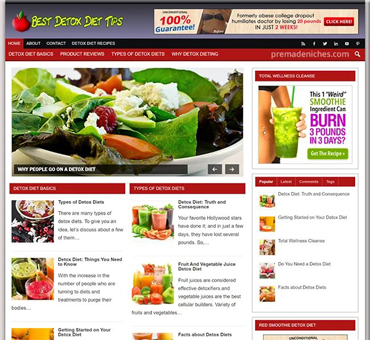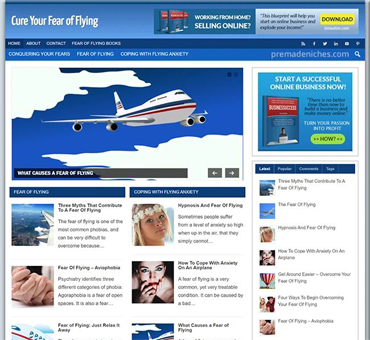


Premade niche websites offer a practical way to begin an online business without starting every task from a blank screen. Instead of spending weeks choosing a layout, configuring essential pages, and preparing a basic content structure, you purchase a site designed for a specific audience or subject. The website may include branding, navigation, starter articles, product recommendations, lead forms, or ecommerce elements, depending on the package. Your responsibility is then to evaluate the asset, improve it, and operate it consistently.
That speed is valuable, but speed alone does not create a profitable business. A premade site is a starting platform, not a guaranteed income stream. Success depends on the niche, the quality of the website, your ability to publish useful material, and your understanding of how visitors can become subscribers or customers. The strongest buyers treat a premade website as a business foundation that requires judgment, testing, maintenance, and patience.
Premade Niche Websites: What a Premade Niche Website Includes
A premade niche website is a ready-built online property focused on a defined topic, audience, or commercial category. Examples might include home organization, outdoor recreation, pet care, personal finance education, cooking equipment, crafts, or local services. The exact contents vary, so examine the offer carefully rather than assuming every site includes the same features.
A typical package can contain a domain name, hosting setup, responsive design, logo, color scheme, menu structure, legal pages, contact form, and several pieces of starter content. Some providers add search-friendly page structures, affiliate links, email capture tools, social profiles, or a small catalog of products. Others provide only a visual template with limited customization. The difference matters because a polished appearance does not necessarily mean the site has useful content, established visitors, or verified revenue.
Ask what you are actually buying. Does ownership of the domain transfer to you? Are images licensed for commercial use? Can you edit the code and content? Is hosting included, and for how long? Are plugins, themes, and security updates covered? If affiliate links appear, will you need to replace the seller’s accounts with your own? Clear answers help prevent unpleasant surprises after purchase.

Why Buyers Choose Premade Sites
The primary advantage is reduced setup time. Building a website independently requires decisions about branding, technical software, page organization, publishing standards, and conversion paths. A premade site removes many early choices, allowing you to concentrate sooner on research, promotion, and customer service.
It can also reduce uncertainty for beginners. Seeing a complete structure makes it easier to understand how a homepage, category page, article, and contact page work together. You can study the arrangement, identify weak points, and gradually learn as you improve the property. For an entrepreneur with limited technical confidence, this visible framework can make the first step feel manageable.
Another benefit is niche focus. A site created for a defined subject usually has a coherent visual identity and audience direction. That focus may help you avoid publishing unrelated material that confuses visitors. A clear topic also makes it easier to identify questions, products, communities, and potential partners.
Premade does not mean passive. You still need to verify the niche, rewrite thin material, add original insight, maintain software, and build trust. If the site contains generic articles copied across many properties, its apparent convenience may create extra work. Consider saved time against the cost of correction before deciding.

Selecting a Strong Niche
A promising niche sits where audience interest, useful expertise, and realistic commercial opportunities overlap. Broad categories may attract many visitors but place you beside established publishers. Very narrow categories can be easier to define but may limit products, questions, or repeat demand. The best choice is not automatically the largest market; it is a subject you can serve consistently and credibly.
Begin with audience problems. What does this group want to learn, compare, fix, buy, or organize? A site built around clear needs has more potential than one based only on a vague interest. Examine the language people use, the questions they ask, the products they evaluate, and the decisions that require guidance.
Next, inspect monetization options. Affiliate recommendations, digital products, advertising, memberships, consulting, sponsored content, and physical sales each have different requirements. A niche should offer a sensible path from helpful information to an appropriate offer. Avoid selecting a category solely because a product has a high commission; if the audience does not trust the recommendation, the business will struggle.
Consider your ability to create material over time. A topic requiring technical accuracy, professional licensing, or regulated advice deserves additional caution. You may need qualified review or careful disclaimers. Choose a field where you can research responsibly and add a perspective that visitors cannot get from a generic page.
Evaluating the Website Before Purchase
Inspect the site on a phone, tablet, and desktop. Menus should be understandable, text should be readable, pages should load reasonably, and buttons should work. Test forms, search, checkout, links, and account access. A beautiful homepage cannot compensate for broken essential functions.
Review every included page. Look for duplicated paragraphs, awkward phrasing, unsupported claims, outdated references, and excessive promotional language. Determine whether content is genuinely useful or merely written to fill space. Ask whether you receive editable files and whether you can remove material that does not match your standards.
Check technical ownership. Confirm the domain registrar, hosting account, analytics property, email service, and social accounts. You should know which credentials transfer and which remain controlled by the seller. Request a written list of included assets, renewal costs, subscriptions, licenses, and support limits.
Investigate any performance claims carefully. If a seller mentions traffic, sales, rankings, or email subscribers, ask how those figures were measured and whether access to the underlying accounts is provided. Treat unsupported screenshots as promotional material, not proof. Past performance, even when genuine, does not guarantee future results.
Examine the provider’s refund terms and support policy. Find out how implementation questions are handled, whether revisions cost extra, and what happens if the platform changes. A lower purchase price may be less attractive if you cannot obtain help with migration, security, or customization.
Turning a Premade Site Into a Business
Start with an ownership and quality audit. Change passwords, activate appropriate security controls, verify backups, and remove access that former administrators no longer need. Check the domain registration details and confirm that your contact information is correct. Install analytics and search monitoring only through accounts you control.
Then clarify the audience. Create a simple profile describing its problems, experience level, goals, objections, and preferred solutions. This profile guides your content, design, and offers. It also prevents the common mistake of writing for everyone and satisfying no particular reader.
Rewrite the core pages first. The homepage should explain who the site serves, what it helps with, and what visitors can do next. About pages should establish a truthful reason for the site’s existence. Contact and policy pages should be accurate and easy to find. Replace vague claims with specific explanations, examples, limitations, and next steps.
Build a content plan around visitor intent. Informational articles can explain concepts, tutorials can solve problems, comparisons can support decisions, and product pages can present relevant options. Link these formats thoughtfully so that a reader can move from learning to action without feeling pressured. Every recommendation should fit the article’s purpose.
Add a conversion path. You might invite readers to join an email list, request a quote, download a useful checklist, schedule a consultation, or purchase a suitable product. Keep the invitation clear and proportionate. Collect only information you need, explain how it will be used, and provide an easy way to unsubscribe where applicable.
Content and Trust Standards
Useful content demonstrates understanding rather than repeating obvious descriptions. Include practical steps, selection criteria, maintenance advice, examples, and warnings about common mistakes. Explain when a solution may not work. Balanced guidance is more persuasive than constant enthusiasm because it helps readers make confident decisions.
Use original wording and verify important facts. If you discuss safety, finance, health, law, or technical specifications, avoid unsupported certainty and encourage readers to consult appropriate professionals when circumstances require it. Do not imply credentials, testing, endorsements, or personal experience that you do not possess.
Make commercial relationships transparent. Clearly identify affiliate links, sponsored material, or paid placements according to applicable rules and platform expectations. Recommendations should reflect genuine relevance, not merely commission potential. Keep records of partner terms, disclosures, and changes so your pages remain accurate.

Create a consistent editorial process. Before publishing, check the headline, structure, factual claims, links, images, accessibility, spelling, and call to action. Review older articles periodically. A site that remains accurate and easy to use can earn more trust than a larger site filled with neglected pages.
Design, Branding, and User Experience
Design should support decisions, not distract from them. Use a readable typeface, sufficient contrast, descriptive headings, and generous spacing. Organize related subjects into logical categories. A visitor should understand where they are, what the page offers, and where to go next without learning a complicated interface.
Branding does not require elaborate graphics. A memorable name, consistent colors, useful voice, and dependable presentation may be enough for an early business. Avoid copying a competitor’s identity or using images without appropriate permission. Choose visuals that clarify the subject and have meaningful alternative text when needed.
Optimize forms and purchasing steps for simplicity. Remove unnecessary fields, explain what happens after submission, and display important costs or conditions clearly. Test the experience as a new visitor. Confusing forms lose opportunities even when traffic is relevant.
Accessibility deserves practical attention. Ensure keyboard users can navigate, headings follow a sensible order, links make sense out of context, and images have suitable text alternatives. Accessibility improvements often make a site easier for everyone, including visitors using small screens or slow connections.
Marketing After Launch
Publishing the site is only the beginning. Select marketing channels that match your audience and available time. Search-focused content can build gradual visibility, while email provides a direct relationship with interested readers. Social platforms, communities, partnerships, video, and paid promotion may help, but each requires distinct skills and measurement.
Avoid promoting every page equally. Identify your strongest helpful resource and use it as an entry point. Share a practical guide, answer relevant questions, collaborate with complementary businesses, or create a short demonstration. Promotion should offer a reason to visit, not simply announce that your website exists.
Build an email list ethically. Offer a useful incentive, describe the signup clearly, and send messages that deliver the promised value. Segment subscribers when their interests differ. A small, engaged list can be more useful than a large list that receives irrelevant messages.

If using paid advertising, begin with a controlled experiment and define the action you want to measure. Track the full journey from click to inquiry or sale, not just impressions. Stop campaigns that produce attention without meaningful business results. Do not assume a high click rate proves profitability.
Measuring Progress
Choose a small set of meaningful measures. Relevant indicators may include qualified inquiries, completed purchases, email signups, returning visitors, article engagement, or revenue after costs. Traffic is useful context, but it is not the final objective. A smaller audience with a strong fit may outperform a larger audience with little intent.
Review data regularly, while allowing enough time to identify patterns. Compare pages and channels, but remember that analytics can be incomplete because of privacy settings, blocked scripts, or tracking errors. Use data as evidence for decisions, not as an automatic explanation of why something happened.
Test one important change at a time when possible. You could revise a headline, improve a comparison table, simplify a form, or change an offer. Record the change, its purpose, and the result. This approach creates learning instead of random editing.
Common Risks and How to Reduce Them
A major risk is buying a site that many other customers receive unchanged. Search engines and visitors may find repetitive material unhelpful. Reduce this risk by replacing generic content, adding firsthand organizational insight only when truthful, improving structure, and developing resources specific to your audience.
Another risk is dependence on one platform, partner, or traffic source. Rules, commissions, costs, and visibility can change. Maintain ownership of your domain, keep backups, build an email relationship where appropriate, and develop more than one reasonable acquisition channel.
Technical neglect can expose visitors and damage confidence. Keep software updated, use strong unique passwords, limit administrator access, monitor forms, and maintain recoverable backups. If you are not comfortable handling security, budget for qualified assistance rather than ignoring the issue.
Legal and regulatory obligations vary by location and business model. Privacy notices, disclosures, taxes, consumer protections, accessibility expectations, and industry rules may apply. Obtain professional advice for questions specific to your circumstances. A premade template cannot guarantee compliance.
FAQ
Are premade niche websites worth buying?
They can be worthwhile when they save meaningful setup time and provide a sound structure for a niche you understand. They are less attractive when the package relies on copied content, unclear ownership, inflated claims, or expensive recurring services. Evaluate the asset, not the promise.
Can a beginner manage one?
Yes, if the platform is understandable and the buyer is willing to learn basic publishing, security, analytics, and marketing tasks. Start by changing credentials, documenting the site, and improving a few important pages. Professional help is sensible for specialized technical or legal matters.
Do premade websites guarantee income?
No. Revenue depends on audience demand, trust, offer quality, traffic, competition, operations, and many factors outside the website itself. Treat projected earnings as estimates, never as a promise. Build a plan that remains affordable if results take time.
Should I choose a broad or narrow niche?
Choose the narrowest subject that still supports useful content and a realistic offer. A focused starting point makes messaging clearer. You can expand later after learning which questions, products, and audiences respond best.
How much customization is necessary?
Customize enough to establish accuracy, trust, and relevance. At minimum, review branding, core pages, policies, links, contact details, calls to action, and all commercial content. More extensive changes may be worthwhile if the original structure does not match your audience.
What should I do immediately after purchase?
Secure every account, confirm ownership, create backups, inspect licenses, install controlled analytics, and review the entire site. Then prioritize the homepage, key landing pages, contact process, and most visible content before investing heavily in promotion.
Can I use the included images and articles?
Only if the transfer terms grant appropriate rights. Ask whether licenses are transferable, whether attribution is required, and whether material was created exclusively for your site. Replace anything whose ownership or permitted use is uncertain.
How long does success take?
There is no reliable universal timetable. Results depend on the niche, content quality, promotion, competition, and offer. Set short-term operational goals, such as publishing useful resources or improving inquiries, while recognizing that audience trust develops gradually.
Conclusion
Premade niche websites can shorten the distance between an idea and a functioning online business. Their greatest value is structure: they give you a starting identity, organized pages, and a platform for testing a focused offer. Their greatest limitation is that a ready-made site cannot supply judgment, credibility, traffic, or sustained effort.
Choose carefully, verify ownership, inspect quality, and budget for improvements. Replace generic material with useful guidance, create a clear path for visitors, disclose commercial relationships, and maintain the technical foundation. Measure actions that matter rather than celebrating traffic alone. When you treat the purchase as the beginning of business development—not the end of it—a premade niche website can become a flexible, credible asset that grows through deliberate work.
WP AI Autoblogging Beginners Guide
Best WordPress AI Autoblogging Plugin

WP Learning 101

Free YouTube Backlink Generator Software

Latest Product